Showing posts with label Research. Show all posts

Tuesday, July 16, 2024

Take My Advice: If You Have Trouble With Tech

Sometimes technology betrays us! It’s happened to us all, usually at a point when we are actively trying to seem competent. If you ALWAYS have problems, however, there might be something on your end you could change. There are some common problems I’ve identified from my time supporting faculty and graduate students with technical issues; these issues not only also affect students (and thus could be usefully passed on to them for their own tech needs) but also characterize a decent portion of my own issues when I stop to reflect. Some of the biggest below:

You’re going too fast. Technology can often allow us to go faster! But going too fast with a technology can not only lead you to make mistakes (guilty), it is also sometimes simply too fast for the tool to keep up. For example, Canvas often needs a refresh to show an updated grade when grading quizzes– it simply won’t update its view for you immediately upon the updating of a quiz grade. And, it’s of no use to start reviewing New Analytics in Canvas immediately; it takes time for it to analyze student activity and grade data and present it to you. It can help if you think of technology not as an instant communicator, but as a collaborator who might take a little time to get back to you. 


You’re using the wrong browser/old hardware. Imagine the software you’re trying to use is a gold-plated, top of the line refrigerator. It’s very nice, it functions perfectly, and it has a lot of features that you’re looking forward to using. Now imagine you give that refrigerator to a Pekingese and tell it to carry it up the stairs, install it, and get it functioning.


A Pekingese who would try really hard, though. Image by No-longer-here via Pixabay.


Not only is that Pekingese not going to be able to lift that refrigerator, it’s also not going to have any idea of what you’re talking about. Using incompatible hardware or software to get your tool working is similar– generally, it’s either not strong enough to carry the task, it doesn’t have the capacity to understand what it would need to understand to carry out the task, or both. 


You’re using a nonstandard tool for the job. Imagine that refrigerator again. It has a door, right? It plugs in. You put food in it. All these qualities are very similar to a microwave, but if you try to use the refrigerator as a microwave, you’re going to be disappointed. Similarly, looking at what a tool was designed for and evaluating if that is in line with your ambitions for the tool can be helpful. That’s not to say you can’t use a tool at sideways purposes– I would argue half of my discussions of Twine are sideways to its intent. (Incidentally, the medium of Interactive Fiction also has a lengthy history of using tech in ways contrary to its intention for creative purposes, so I feel I’m part of a rich tradition.) However, you’ll experience less frustration if you do so intentionally, rather than realizing that you’re trying to give feedback with a software that’s really only meant for file sharing, or facilitate group collaboration with a tool that only allows one or two users at a time. 


I’m in an interesting predicament at the moment where I’m trying to use AI tools to complete some data analysis. I am reading about good prompting strategies and trying to use them. I’m trying to build a foundation and then build on top of it. I’m trying multiple different strategies to see if I can come to some different results, even if only to give me some insight into how to better get the results I want in future. Yet, at the moment, it’s been more time checking and evaluating and figuring out where it’s getting its ideas than actual time saved in the analysis from the way I normally do it. 


I don’t think I’ve been going too fast, although I admit sometimes I see the demos of how quickly AI can pop together information and read reports of how it’s dramatically cutting time spent on certain tasks and I’m like “shouldn’t it just be able to do this for me already??” My hardware and software don’t seem to be the limiting issue– it’s not that it’s too slow, it’s that the conclusions are incorrect or partially correct or inventing some information that is not quite there. And the tool by all reports seems to be the tool for the job (see above demos), although perhaps a lesson I may end up learning is that some parts of the job are beyond it. I think the issue is actually a number 4, which is that the tool is more complicated to use than I am treating it as, and I don’t know enough yet about using it effectively. Straightforward and simple UX is powerful, but it can come at the expense of tailored, expert usages– think about what can be achieved by a pro using HTML to create a website versus a novice using Blogger or WordPress, or by a musician versus the prerecorded tracks on a child’s toy keyboard. The problem I’m trying to solve, then, may simply be one that is more “improvisational jazz” than “Old MacDonald.”


The strategy that's been most helpful to me so far is one that can be difficult for a lot of us to use: ask someone else to make an attempt at it, and learn from what they do. When in doubt, have someone else try! Either they have success, which you can learn from, or they don't, in which case you can at least feel a bit better that you are not alone.


Any of these tech issues plaguing you, or others? Let me know in the comments!

Tuesday, December 12, 2023

Plug and Play Miniseries Lesson Spotting with AI: Talking to Write

Old fashioned television with flowers.
Photo by Işıl via Pexels.

Despite widespread enthusiasm about having AI help generate content, that's not in my experience the best way to use it. One, it's doubtful it knows as much about what you want to convey on your topic as you do. Two, conversely, you're probably better at the content than you are at communicating it clearly. In this post, I'll offer a few suggestions for how to use AI to help with writing and clarity, which could be useful for both instructors trying to create educational/assignment content and students attempting to frame their ideas for coursework.

I tend to think as I talk-- the talking is the thinking, and talking through a topic helps me write it down. When I'm preparing to lead a workshop or give a presentation, I often begin by recording myself trying to give it off the cuff based on the ideas I have right now before I start outlining or writing things down. Then, I use the talk-through as the basis for the outline or script or notes. Sometimes I do this in the opposite direction; a brief and sketchy outline that I talk through and then edit based on what I said. In the past, I've always done this using Zoom and then watching back the recording.

More recently, I've started using a combination of two technologies to begin creating written work. First, I speak the ideas into text-to-speech, like dictation.io. Then, I take that text and ask ChatGPT to make it grammatically correct and separate it into sensible paragraphs. This is so much easier for me than fully typing out all the same ideas-- I can talk just about as fast as I think, while I am a decidedly slower typer despite years of practice at Typing Tutor. This strategy works best if you speak in small chunks and confirm that dictation.io is absorbing it all; I've noticed dictation.io does not capture everything I say if I speak for a long time. It's also important to communicate clearly with ChatGPT or your AI chatbot of choice-- it will attempt to smooth the language and potentially add (too many) adjectives by default, so if you want language adjustments, give clear parameters; if you just want the text to be given appropriate puncutation and capitalization, say so.

Most recently, I'm intrigued by some of the AI offerings within Zoom to transcript and summarize meetings; in theory, this could mean that a recorded first draft could have a relatively coherent text component to work from. If you have a paid Zoom account, it's worth playing with these features and seeing if they do anything for your process.

Monday, January 31, 2022

Take My Advice: Four Tech-Fueled Efficiency Tips I Wish I'd Known Four Years Earlier

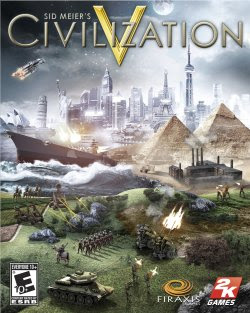
Front cover for the video game Civilization V.
If you'd like a tech-fueled inefficiency tip, this image should serve. 

I have always been technologically curious, but as one grows and changes, perhaps it is inevitable that one realizes what they didn't previously know or appreciate; so too have I realized that there were lots of technological possibilities that I was slow to take up. There seems to be an undertone of skepticism among folks in academic humanities circles about using technology, systems, or techniques for efficiency and an even greater fear of admitting one has engaged in such behavior, and so I perhaps unnecessarily developed an aversion to using it to support my research; though I was keen on incorporating tech into teaching, my process of doing so was admittedly prone to making my preparations more time-intensive rather than less (implied, I think, by my observation in this 2018 reflection on preparing my Fiction and the Historical Imagination course). Part of this, I think, was a symptom of a peculiarly humanistic tendency (or so it seems to me) to feel that to save time is to be cheating in some way; that if our work is valuable it is valuable because we agonized over it at great length, and can be said to have depended upon no one but ourselves and our incredible intellects. Ultimately, however, both students and the work, not to mention my own well-being, have been better served by embracing ways to make life a little easier and a little more collaborative. As a result, in this post, I'm reflecting on four things I came to appreciate in the last two years or so that I really, really wish I'd been doing the whole dang time.

Use OCR

Optical Character Recognition (OCR) is much better than it used to be, and it doesn't have to be perfect to be helpful. I think I became hesitant to try again with OCR after an ill-fated attempt at digitizing a single issue of Cosmopolitan magazine so I could "perform Digital Humanities" on it as an undergraduate. However, toward the end of my dissertation writing process and into my current work I've seen how improved the technology is and how much I now take it for granted. If you have archival photos or scans, try using Adobe Acrobat or a free OCR tool to recognize the text. This will not only make it more accessible if you are distributing it to students, but also make it easier for you to search for terms within it (which would have come in very handy had I figured this out earlier in my dissertation research process, as I worked almost entirely from archive photos and scans while writing).

Use Excel

You know you can use Excel for whatever you want? You don't even have to be a card-carrying "quantitative researcher." Here's one thing I now use all the time and which would have worked well in conjunction with the idea of OCRing things: the UNIQUE function, which can take a list of items and strip out all the repeats, leaving only one iteration of each name, number, list item, etcetera. Imagine how much more easily I could have answered questions about how many disabled children were represented in an issue of a periodical if I'd known this.

Use the Internet

You don't have to do everything yourself. Some subjects have existing resources, whether entry-level memorization and practice activities on tools like Quizlet or Kahoot or mid- to higher-level activities created by other instructors and distributed on educational resource sites like MERLOT or the Zinn Education Project or through affinity groups like the Reacting Faculty Lounge or via personal blogs (hi!). Some activities pitched to high school learners can be employed usefully in a higher education setting with a few tweaks. Some materials can also be created by students as part of their learning process; instead of making a Quizlet for students to practice with, ask groups to create their own Quizlets of the top five or ten topics / terms / concepts and compare their results. 

In short, I wish that I had appreciated earlier how many other things existed that I could use rather than reinventing the wheel every time. Sometimes it seemed like it would have been harder to find and enact an idea elsewhere than creating it myself, but looking a little harder could have paid off-- not only would this have saved me time, but it would have been useful to me to see how other people were approaching teaching various topics to inspire the activities and assessments that I created.

Use a Repetition-Mitigator

Relatedly: If you do have to do something yourself (making an activity, grading), you don't have to create everything from scratch every time. It's great to make something new! As I've mentioned in a previous post on career preparation, if you are an early career teacher, it's in fact essential to make some new things if you'd like to be able to fruitfully reflect on those experiences in later job interviews or teaching statements. However, if you save time on some of the more rote requirements and/or incorporate already existing resources, you'll have more time for creating novel activities and giving meaningful feedback. 

Efficiency in grading is one example of this. Rubrics and comment libraries (either technological ones, like within LMS systems, or low-tech numbered lists you can show to students in conjuction with papers marked with corresponding numbers) can allow you to skip writing "Needs to use at least three sources" in paper comments seventeen times, leaving additional time to write more specific and useful comments like "Your paper's argument might benefit from a closer read of Source A" or "If your goals are X, you should focus on Y aspect of the homework for next week." I only started appreciating what a time-saver this could be late in the game, and I wish I'd used it more thoughtfully and more often.

What tips, strategies, or tools do you wish you'd appreciated and used earlier? Feel free to let me know in the comments-- I just may have to start adopting them myself.

Related Links: 

One of my favorite activities supported by an existing resource: after being asked to deliver a short lesson to a group of epidemiology students on the fly during my time at the Johns Hopkins Center for Talented Youth, I followed a brief lecture on the history of polio with asking students to play the Smithsonian National Museum of American History's Got Ramps? Architectural Barriers Game and compare notes on which endings they achieved. 

If you're interested in the NMAH's work on polio, or thoughts on incorporating museum resources and exhibits into teaching, you may be interested in revisiting this 2017 post on the curator's interview with David Serlin.

Sunday, November 7, 2021

Current Project: Taking, Talking, and Thinking Through Career Development

A gif infographic listing my three approaches to career development-- Take, Talk, and Think
I made this graphic in Canva

Recently I had the pleasure of joining current and former graduate students from the UIUC Department of History to discuss my experiences with career diversity and my embrace of a non-tenure track career path. Teaching can play a critical role in that path, as teaching is often (though not always) the first chance that many graduate students get to apply their skills in a different way than their writing and research, and to something that often feels like a space more within their control and more akin to "paid employment" than other aspects of their lives and work. 


Because of this connection between teaching and career development, I wanted to reflect today on some takeaways of that session, particularly since teaching is instrumental to that story. I've divided these into three key topics (as you may have guessed from the graphic): mindsets that in hindsight I found to be the most helpful things I did without always knowing that's what I was doing. 


A note that most of these observations are for people thinking about their place on this path, not for the people who organize graduate programs, except insofar as those people might well take the idea from this to emphasize creating space and opportunity for these things to take place. The reason why is twofold; first, this was my experience, and I can speak to it better than just about anything else. Second, at the end of the day, I am fairly aware of who makes up my readership (friends, current and former graduate students, and some of my former students, hello!), and no one is more capable, more interested, or more qualified to make the kind of decisions I made, wish I made, wish I'd made more often and in more ways, than you are. 


Take


Lots of people talk about the "tenure-track academia" path and the "not that" path as two separate ones, but there was really never a "two roads diverged in the wood and I" moment for me.* During the course of our conversation, I concocted a somewhat tortured but nevertheless illustrative metaphor about the journey. For me, deciding to go to gradschool was a bit like going to the store for apples. I knew that I was going to go in and come out with apples-- or, as a professor. As I started moving through the aisles, though, I started grabbing some other things, and realized by the end that I had a basket filled with a lot of things, which I could use in service of a lot of different goals. And every time I grabbed an extra thing to put in that basket-- that is, developed a new interest, took on a job or volunteered to do a task-- I didn't do it with a perfect grand plan in mind. It came from following my interests, trying things that sounded interesting and that I wanted to know more about. In short, you don't have to make a large decision to pursue keeping your options open-- you just have to take things and put them in your basket, knowing they might give you options later.


Talk


Networking isn't schmoozing, it's reciprocal and thus is tied with knowing the value of your labor. Alison Green has pointed this out in many ways on Ask a Manager, and the topic came up in our conversation as well. When someone is in dire need of a job, it can be hard for them to see the other person as a person rather than as an opportunity-dispensing machine. But most folks I know are actually interested in other people! So, approach your talk with mutual gain in mind. Most people love to know that something from their experience helped you. And if you know the value of your labor, you'll know that it can incredibly helpful for someone to be able to say, soon or far in the future, "oh yes, I know someone who might be able to fill that position/consult on that work/ direct that project." But it probably isn't something they can do immediately-- networking in this way is setting yourself up for the potential future, just the way the opportunities you put into your grocery basket are. Most folks don't have the power to just pick you up and slot you into a job, and if it worked that way it would be even more unfair than the process often is currently. It's like any other relationship you build with another human: you can't rush trust, comfort, or intimacy. You have to build it with small bits of evidence about your interests, skills, and work style. 


That also means networking doesn't have to be overly complicated or awkward. For me, networking was volunteering a couple of hours of my life to keep time during the university's teaching assistant orientation's microteaching sessions. It was joining a professional organization in a field I was interested in and attending a virtual event. It was scheduling a meeting with a graduate career advisor who introduced me to someone in a field I was interested in. It was doing a couple of informational interviews with various people who were, uniformly, happy to talk to someone about what they do. Even the things that I didn’t want to do, ultimately, were helpful. Some of the useful information I got from informational interviews was "well, I don't want to do that!" So, talk-- to anyone and everyone who knows something about something you think you might like to know more about. 


Think


Teaching skills-- like all skills-- can stand you in good stead in many markets, but you have to actually think about how you are doing it and why. Unfortunately, many graduate students do not feel encouraged to do this reflective work, at least in my experience and my conversations with others. They are instead told to go and do what is necessary to keep their funding and get through the semester, but they are not encouraged to develop pedagogically beyond what is "always done." As unfair as this may be, this means that most have to use the opportunities they have to make this sort of experience count through their own initiative, as rarely will anyone scaffold this particularly well for you. Going into class and telling students "discuss the reading" will not provide useful experience for you; nor will putting lots of effort into things without reflection, like painstakingly writing the same three wordy comments on every essay. 


This doesn't mean you need to agonize over every lesson or reinvent the wheel every time you open your Zoom window/classroom door/Canvas course. Instead, I suggest finding one topic, idea, or objective you want to emphasize the next time you teach and really think about how best to do so: do some research on how others have taught similar ideas, create a novel activity or assessment, and talk to your most pedagogically-minded colleagues about what you're planning, how it went, and what they do in their own courses. In doing so, you'll have created an example that you can forever use as an indication of your teaching style and your work style.


I hope take, talk, and think are as useful to you as they have been to me. And of course, you're always welcome to take from (the archives of Activities and Materials are open for your perusal!), talk to (contact info is on the right sidebar!), and think along with me. 


Notes:


*Not especially a huge Robert Frost person, but I always find myself quoting him in writing; just like experiences, I often throw little bits of language that strike me into "my basket" for later. (My favorite which I slipped into my dissertation is "Home is the place where, when you have to go there,/They have to take you in.")


Wednesday, September 29, 2021

Current Project: A Post That Took Seven Years (Kinda)

Current Project: A Post That Took Seven Years (Kinda)

Me wearing a graduation cap and gown and holding a piece of paper that says "Doctor!"
Me with a very official diploma. Photo by Saniya Ghanoui. 

Just about the time that I was setting into the warm bathwater of life after the PhD this month, I received a notice from the Thesis Office at the University of Illinois that my dissertation is now available on IDEALS. It is an odd feeling which lots of people have reflected on before-- seeing something has become available in some sort of "finished" format which to you feels, looking back, like it was concluded both too soon and too late. 

Folks have asked me what I plan to do with it, and the truth is I'm not yet sure. At the moment, I am satisfied with the fact that I got the most significant (to me) portion of the dissertation into print (the first chapter, as ‘Every One of Them Are Worth It”:  Blanche Van Leuven Browne and the Education of the ‘Crippled Child’”).

It was also important to me to release the dissertation with the most access possible. As I've moved away from a career in which it is paramount to publish at all costs, I wanted people who were interested to be able to read about the things I've found if it could at all benefit their lives, interests, or activism. I could see publishing it as a monograph or sorting it into more articles someday, but I could also see it as many small pieces; portraits of the activists who fuel its arguments in shorter and more personal formats. 

However, although the dissertation's content does still feel important to me-- telling stories that lots of folks have never heard about people who they've never known of--the dissertation itself represents a lot of things beyond what's in it. Perhaps this is part of the difficulty of coming to terms with what it means. It's the thousands (literally, thousands) of pictures from archival and secondary research in my storage (the archival photos with lots of typescript and thumbs; the secondary research scribbled pencil notes in whatever tiny notebook with a dog on the front I was carrying at the time). It's the hours spent revising and recycling its contents not only into proposals, drafts, and conference papers but into endless permutations of fellowship applications to fund (or attempt to fund) its creation. And of course, its the hours and days and years of feeling that you are, potentially, doing every single thing in your personal and professional life entirely wrong. (The dissertation has a way of exaggerating; even now, just the phrase "the dissertation" gives me a frisson of dread.) 

It's also the personal impacts of the dissertation process on the person you are. For me, it made me humble in the classroom, as I saw my own writing having the same exact problems as that of the students I taught (move the last sentence of the paragraph to the beginning and you'll have a topic sentence!). It made me a competent and resilient traveler, as I had to go to over a dozen archives across the country and pivot around multiple catastrophies (a car crash, a bad Airbnb, a suitcase held together with tape) to get to the finished product. And honestly, it made me pretty miserable a lot of the time.

In short, at the moment, my plan is to let it breathe, and get some distance, and take some pride in what it is without moving straight to wrangling it into a new form after this one was so hard-won. So, if you'd like to read, skim, or search it, you're welcome to; just save your edit suggestions for... some future time when I'm more ready for them! 

Friday, April 30, 2021

Current Project: History SoTL and Diversity, Equity, and Inclusion

Some personal news: I've defended and deposited my dissertation. Hooray! As my time at the University of Illinois comes to a close, I decided to go for one last goal: finishing the requirements for the Center for Innovation in Teaching & Learning's Teacher Scholar Certificate, which you may remember from my teaching resolutions for 2019. As the deadline approached, the last thing on my list was (perhaps unsurprisingly) the longest one: a semiformal review of five to six articles about some aspect of teaching in my home discipline. This is necessarily a very preliminary look at the subject of DEI in History SoTL, and could certainly include many works which I either omitted for space or didn't come across in my searches. However, I was pretty interested in what I found in the literature, so I'm sharing it below. 

Empty desks and chairs in a classroom.
Empty desks and chairs in a classroom. Photo by MChe Lee on Unsplash.

In this review, I explore the way in which diversity, equity, and inclusion (DEI) are addressed within the literature on history teaching and learning, with a particular focus on race and ethnicity. Although these topics are integral to every discipline, they are especially significant within history courses, as not only are students themselves approaching the topic from a variety of backgrounds but there is also an expectation that our course material will include histories of, at the very least, race, gender, and class. Doing both of these projects well—DEI within the curriculum and within the classroom population—is critical, and they are intertwined, but an instructor doing one well does not mean that they are necessarily doing the other well. In my survey of the literature on scholarship of teaching and learning (SoTL) in history, I have found far more attention to the second topic than the first; that is, historians working on these topics have paid more attention to incorporating diverse voices into the curriculum than to contemplating how to teach effectively in a diverse classroom and how to create a culture of equity and inclusivity in history courses. However, some of the most effective pieces showed the connections between these two themes, showing how the content and the classroom methods of DEI in history teaching are interwoven.

First, it is useful to look at two foundational pieces which set the stage for these two discussions to set some foundational elements of the discussion. The first gives a sense of what an inquiry into classroom diversity might entail. Mark A. Chesler’s “Perceptions of Faculty Behavior by Students of Color” deals with the experiences of students in the classroom, reporting concerns and negative experiences by students of color as well as things that made them feel welcome and encouraged. Negative experiences included singling students of color out as “experts” in racial/ethnic issues in class and assumptions about heritage, class, parental background. These examples stood out to me as particularly relevant to history courses. Faculty often want to engage students by helping them find relationships between their own lives and backgrounds and the material being covered; however, doing so uncritically can lead an instructor to assume connections that are not actually present or that the student does not wish to publicly engage with. Many in the focus groups also highlighted more broadly ineffective pedagogy as a key concern, and Chesler uses this information to contend that some of the examples seem to be “apparently race-neutral behavior that white students as well as students of color may object to or find ineffective. However, students of color may be especially vulnerable to alienated from the emotionally distant, impersonal and bureaucratic educational approach reflected in most large lecture classes.”[1] Thus, this article sets up the important claim that good pedagogy—engaged, personal, adaptable, and student-focused—is a key element of classroom DEI work.

The second foundational piece explores the functions and practices of history SoTL and takes up the duality of knowledge and its teaching. In “The Amateur in the Operating Room: History and the Scholarship of Teaching and Learning,” David Pace delineates the current boundaries and potential future of a scholarship of teaching and learning of history. While historical research practices have become ever more sophisticated, Pace suggests that historians’ approach to teaching history has failed to keep pace, and many write lectures and plan course material in isolation. Historians’ meticulous devotion to research did not translate into learning strategies for effective teaching from educational research or methodical observation, even when they cared deeply about teaching; there seems to be a notion afoot that one’s historical knowledge is the font from which good teaching flows. Pace suggests that these are separate considerations; that “behind every act of teaching there are two different forms of knowledge: knowledge of the subject matter, and knowledge of how it may be taught and learned.”[2] Considering questions that educational research considers can offer benefits, he contends, particularly if historians study their own applications of these principles in the context of history and come to some conclusions about effective strategies for the discipline; for example, in not assuming that students enter the classroom a blank slate, but rather knowing that they come in with a host of beliefs and experiences that cannot be assumed. This work is broad, not particularly focused on DEI topics; yet its emphasis on the distinction between the content and the execution of the content in a classroom setting, as well as the claim that students’ incoming knowledge and experiences will impact the way they experience and learn material, are foundational to considerations of DEI in a history learning context.

The literature I reviewed suggests that simply dropping more diverse historical figures into the curriculum has little efficacy, either as a useful depiction of the past and of the discipline of history or as a solution for the ills of U.S. racism. William L. Smith and Ryan M. Crowley argue that Barack Obama’s 2008 “A More Perfect Union” speech has not only been used widely in classrooms to explore the history of race in America and promote racial literacy among students but also contains features that make it particularly valuable for that purpose. As part of this work, the authors contrast this approach with the common inclusion model, or adding more diverse figures to the course of study; they note that “Adding black and brown faces into the pantheon of curricular heroes does little to interrogate the function of ‘hero-worshipping’ as educational practice or how these historical figures may serve political purposes in the present.”[3] In other words, it is not enough to incorporate historical figures of color into the curriculum; instructors must use course material thoughtfully to provoke deeper understanding of race and racism. They set out to show how material like Obama’s speech provide current political and personal connections to students of race and racism in history and can serve as a more useful past for the purposes of history teaching than the inclusion model. However, they also emphasize that this does not necessarily follow just from using the speech in class. Many of the lesson plans they examine which use the speech do not actually encourage students to think structurally about racism or emphasize “fixing” the problem of racism rather than spending time in analyzing its function and its impacts.[4]

Some authors suggest that course material that incorporates diverse experiences and connects the historical to the personal can increase student engagement and encourage letting students’ personal interests lead some of the inquiries in their history learning. Writing for Teaching History, Joanne Philpott and Daniel Guiney discuss the power of personal narratives in history teaching, highlighting how such stories can compel an audience not only to listen and engage but also to think analytically about a period.[5] Yet to compel students personally also requires attention to the integral features of their personal lives; that is, diverse students need diverse stories. The authors set out to integrate these sorts of stories into an existing educational trip to World War I sites for Grade 10 students in Norfolk. Previously, the trip had been designed without much attention to the meaning students could find in and connect with the sites, either personally or culturally. The authors redesigned the experience to focus on local connections, diverse sites and stories (including ethnic, religious, and cultural diversity, with a particular eye to how the demographics of Norfolk had changed in recent years), and making remembrance personally meaningful, rather than focusing on military tactics or politics exclusively. Overall, Philpott and Guiney’s work showcases the significance of course content as a site for diversity, equity, and inclusion, making course material—even that which seems as informal as a field trip—incorporate a range of experiences. This inclusivity in material not only gave a fuller, more accurate picture of the war itself, it also engaged students in the project of history, showing that they and people like them—or, for some students, both people like and people very different from themselves—were part of the making of the past.

Another piece explores the interwoven nature of the personal and the historical, as well as effective ways to construct a classroom that enables all students to feel safe in tracing that connection. Maia G. Sheppard writes her article “Creating a Caring Classroom in which to Teach Difficult Histories” as an ethnography of an undergraduate history classroom in which one professor of African history blended the personal and the historical in her pedagogical practice to “create a place where the local and the global, the abstract and the particular, are in constant communication as students are encouraged to construct new images and understandings about each other and the history of Africa.”[6] This description places the personal and the historical on equal footing—the project of the course is not merely to learn history in a safe environment, as Sheppard interprets it, but also to offer students the chance to construct a new point of view on their immediate lives. The pseudonymous Professor Lake encourages her students to bring personal experience into their analyses of the material and shared her own experiences and emotions in turn.

The limitation of the approach to linking the personal and the historical in each of these works to address DEI issues is that it elides the ways in which many ways we inhabit the classroom are not merely treatments of the course material—that is, that treating historical material with sensitivity and intellectual dexterity does not necessarily correlate with equitable classroom practices, and that encouraging students’ personal connection with the material, when done too strongly, may lead instructors to presume that students have experiences that they do not actually have, or to force disclosure of information students would rather not share. One potential solution to this is Philpott and Guiney’s plans for future trips, in which they hoped to incorporate greater student input into the planning and preliminary research of the trip through the selection of a diverse group of students to explore the options. They noticed that many students wished to return with their own families, and some had done their own research prior to the trip about things they wanted to see and aspects of their own family history which connected with the sites. Institutionalizing that creative energy and incorporating a diverse range of students into a planning and research committee for future years, they contend, would build in student involvement in diversifying the trip and helping draw personal connections to the sites. Likewise, the emphasis on blending the personal into the historical does not address the small details students mention in Chesler’s paper that should be of concern to history instructors concerned about equity and inclusion, like teachers only chatting and joking with white students before or after class or seeming afraid of their students of color; that is, it elides interactions that are unrelated to the course content but still make up critical parts of the course experience.

Overall, then, future work in History SoTL could further take up explicit questions of identity and power within the classroom as well as within our course materials. It seems almost as if many historians who teach assume that they may need help with content but are sure they have classroom management and implicit biases under control. Yet, in comparing experiences I have seen in history classrooms with the incidents disclosed by students in Chesler’s 1997 paper, many of these ways of relating to students of color are alive and well in the history classroom. Moreover, our courses grapple with deeply “felt histories” which still impact students and spark national debates; these necessarily demand more than good sources, but also good approaches to structuring discussions about them.[7] Perhaps, then, the approach taken by Philpott and Guiney and the teacher referenced in Sheppard’s article of interweaving the personal and the historical is more than just a method to engage students; it also engages history instructors to think about both content and classroom interactions—a small step, but a step nonetheless.


[1] Mark A. Chesler, “Perceptions of Faculty Behavior by Students of Color.” CLRT Occasional Papers, University of Michigan, no. 7, 1997, 4.

[2] David Pace, “The Amateur in the Operating Room: History and the Scholarship of Teaching and Learning,” The American Historical Review 109, no. 4 (October 1, 2004): 1171.

[3] William L. Smith and Ryan M. Crowley, “Barack Obama, Racial Literacy, and Lessons from ‘A More Perfect Union,’” The History Teacher 51, no. 3 (May 2018): 450.

[4] Smith and Crowley, “Barack Obama,” 459.

[5] Joanne Philpott and Daniel Guiney, “Exploring Diversity at GCSE: Making a First World War Battlefields Visit Meaningful to All Students,” Teaching History, no. 144 (2011): 26–33.

[6] Maia G. Sheppard, “Creating a Caring Classroom in Which to Teach Difficult Histories,” The History Teacher 43, no. 3 (May 2010): 413.

[7] Robert Penn Warren, The Legacy of the Civil War (Lincoln: University of Nebraska Press, 1961, 2015), 1.


PS: If you have thoughts on this literature or reading recommendations on the intersection of DEI and SoTL, I'd love to hear them, so send them my way! 

Tuesday, March 31, 2020

Plug and Play: The Handy (Digital) Dandy (Research) Notebook

It's been a challenging month (years from now, I'm sure future historians will marvel at how just about every piece of conversational writing begins with a similar observation; many people on the internet have made similar observations). I've been trying to figure out what I could post here that would be most useful-- more links to more online resources offering more ways to transition classes online? Reflections about historical epidemics and the history of medicine? Cute dog pictures to ease the stress? 

With perhaps the exception of the last, it seems like there are already enough of these to go around, written with more expertise than I have in distance learning, and epidemiology, and dog ownership, respectively. Instead, I wanted to offer up an activity idea I had recently, useful for both in-person and online classes, designed to aid writers of all levels in their research process: The Handy Dandy Notebook.

Okay, maybe one dog picture.
Winking black and brown puppy photo by Dominika Roseclay from Pexels. 

A few caveats: This is not only a fairly straightforward activity to assign to a class; it's also a pretty good reflection of my own research process on projects big and small, which means it's idiosyncratic; it may not be useful for the naturally organized, the meticulous outliner, or the linear thinker. However, it has been a lifesaver for me, and I often wish that someone had suggested this process to me as an undergraduate. Moreover, although I am envisioning it as it would be used in a history course, it could easily function for a lot of disciplines which emphasize finding, analyzing, and evaluating information from a variety of sources.

First, you'll need a shared online (semi-)collaborative space to work in. I like and recommend OneNote for this because it allows you to just absolutely dump things in indiscriminately-- you can type anywhere you like in the work area, handwrite with a tablet and stylus, drop in PDFs either as shortcuts to a download or embedded directly into the page, and highlight, underline, or scribble on any or all of those things with various pens. Those functionalities are fun and helpful; however, you can easily accomplish something similar with a Google Doc or set of Google Docs, a Word document uploaded to a course platform or Box folder, or a variety of other software options. 

Next, each student needs a topic. This could be put to great use as a research paper starter, particularly in the phase in which students have chosen topics but have not yet figured out which sources they will use. It could also work well as a way to give students a taste of a topic that you are about to begin discussing, revealing what mass culture has to offer on the subject before jumping into its academic treatment. For example, before students in my Fiction and the Historical Imagination course began our section on Westerns, I asked them to look online for any source that sparked their interest which purported to define or explain the Western and post it to a Compass discussion board. 

Third, each student needs a space in which to work (their "notebook"), and time in which to do it. If using a collaborative option, give each student a page or section of the shared space. You can outfit this however you like; you may wish to just indicate the name of the student, or you may wish to provide brief reminders, instructions, or suggestions based on their proposed topics. I would offer the following instructions at minimum: 

  1. Copy and paste every link you look at into your space, and remind yourself a). what was in it and b). what you thought about it. 
  2. This is not formal-- worry about "future you" looking at it, not "present me." That is-- these are designed to be resources for your project; it's not designed for me to evaluate how "well" your initial research is going. 
As far as time goes, I'd suggest giving students a rough, relatively brief amount of time that you'd like them to spend researching to limit stress and maximize the benefits of unstructured research time. 

Next, stand back and wait! Let students chase down their topics. 

Next up is classwide comparisons. When it comes time to discuss (in person, synchronously over Zoom or in a class chat, or asynchronously in a discussion board), they should examine others' notetaking styles and see what stands out to them-- do you see any techniques you'd take for yourself? What did others think was important, and how does that compare to what you noted about your sources? 

In my own work, it's about 50/50 that I return to my notes weeks or months later and think "Oh, right!" versus "Huh?" Optional but useful, depending on your goals: Have students return to these notes two or more weeks later in the semester. Do they still remember these sources? Do their notes make sense to them, or would they need to reread the sources if they wanted to write about them? This could be examined in an individual reflection, a class or small group discussion, or in the context of actually using the notes to craft a paragraph or other short assignment.

What does this activity, as a whole, do for students? At the most basic level, it encourages the beginning of reflection on a writing topic, offering permission for students to get started early. Perhaps more significantly, it offers students the chance to practice and get feedback on something that can be quite mysterious: the research process itself. Frequently when others have tried to introduce notetaking approaches to me, it has failed miserably because my writing (and, really, everything) style is chaotic; I need novelty and mess at the beginning before I can transition anything into order and linearity. This activity offers beginning writers both (to mangle a cliche) roots and wings: enough boundaries to feel secure enough to try; enough freedom to take a chance. Finally, and maybe most practically, by getting into a habit of noting literally every site and piece of information they look at online, a writer is less likely to struggle with both plagiarism and the frustration of tracking things down later that they didn't realize they'd want to use. It's only through trial and error that I've realized that it can be good to elaborate on where I found a document I'm making notes on as well as just the title and the author (was it Google books? An interlibrary loan? An archival document?), because it's never as easy to remember this a year on as I thought it would be at the time. It's also a very helpful tool for writing these blog posts-- where else would I get all the links I end up putting in? 

How do you help students practice good research habits in your discipline? Are you finding it more difficult to do so in the wake of moving instruction online? Let me know! 

NB: I hope you are all doing well in this stressful time. If any of you self-quarantining find yourself with more time at home than usual on your hands, want to share any of your struggles and triumphs of pivoting to remote education, or have questions or topics you'd like me to address, I'd love to feature your guest posts and/or answer your questions. 

Related links: 

Title talk: I'm very skeptical about this, but apparently if you want your own handy dandy notebook, you can buy one at this self-titled online store?

Authors that have talked about the type of writing that involves "making a mess and then cleaning it up," like Anne Lamott and Joan Bolker have helped me (and inspired this activity) immensely.

If you are looking out for resources for online teaching, I suggest UIUC's Center for Innovation in Teaching & Learning list of resources for the COVID-19 transition to online instructional delivery. 

If you're lacking in a little light reading material, might I suggest this digital archive of 6000 children's books?

Wednesday, January 30, 2019

What's History: Little Local Sources on Big Cold Days

This is it, the Big Cold Day. We've been talking about it for a week. As predicted, Midwestern temperatures lost so many degrees it seems like sheer irresponsibility; the wind chill has it feeling like -40 F outside in Champaign today (not, of course, that I have felt it for myself, as I'm afraid to let in the cold air and never get warm again). Everyone here is hoping their furnaces keep kicking for the duration and fervently instructing one another to "stay warm." 

In honor of the occasion and because I definitely don't have anything else to do (ha), I thought it might be interesting to do a little investigation into the history of notably cold weather in these parts, using a nifty little database called the Illinois Digital Newspaper Collections. I wanted to see the papers in the immediate vicinity, to link as closely as possible the weather of today to other past Big Cold Days , and see if there was anything useful for a class assignment that might come out of this sort of investigation. The great thing about this collection is that, unlike many library resources I use to do research, it's free to use for anyone without any sort of login, so follow along if you'd like! 

As I settled in I ran into an interesting little research problem. There were four collections involved in this project: the Illinois Digital Newspaper Collection, which has the local papers I was hoping to examine; Farm, Field, and Fireside, which holds agricultural papers from around the country; American Popular Entertainment, full of entertainment industry trade journals; and Collegiate Chronicle, students newspapers from a wide variety of postsecondary institutions. I'm sure these last three all have something to say about weather, but I wanted to know only about the closest regions' papers, so I needed to look only at the first collection. I could browse through titles in each of these collections, but the search didn't seem to let me narrow to a collection-- I could choose to confine the search to one or more paper titles (though only more than one if they were next to each other in the alphabetical list), so I just compared the list from here to the list of options here and searched within a few that looked promising. 

I decided the word "coldest" was the most likely candidate to look for in the papers I examined-- The Champaign Daily News, the Daily Illini, and the Urbana Daily Courier. Below are a few favorites-- all titles link to the originals, with PDFs available of the full issues. 

Amongst two pages of reporting on a tragic 1903 theatre fire in Chicago, this brief article adds a bit of levity. D.C. Long, a local Civil War Veteran who appears a few other times in the Urbana paper, claims that exactly forty years ago was the coldest in the history of the nation, with animals killed by the chill. "I don't know what the thermometer registered, but it was cold, I know that," he concluded. 

"Cold Forty Years Ago Today," Urbana Daily Courier, Jan. 1, 1904.

These stories appeared a page apart in a 1929 issue of the Daily Illini. I like the focus in each on the role of the "weather man"-- the AP reporter accords him a lot of power! 

"Brrr! Thermometer Dropped to 8 Below Yesterday Morning" and
"Weather Man Has Touch of Kindness,
" Daily Illini, Dec. 4, 1929. 


This 1959 report of an unusually cold November features a student giving a far better demonstration of proper scarf usage than her modern counterpart distributed by the University of Illinois yesterday

"Winter Hits Area Before It's Due," Daily Illini, Nov. 18, 1959. 


It was a lot of fun sorting through these sources. I'll likely find a way to incorporate a similar activity into a history course, especially one on media or an intro to historical methods. The benefit is similar to unstructured research time, with more of a defined, if small, endgoal-- to figure out some connection to a modern event in the past. It's a nice practice run before students jump into trying to find sources for a large research project, with lots of directions to run in and few ways to really fail. It could also lead into a discussion of shifts and continuities in how the topic is discussed in the press-- how have we been informed about the current weather as compared to those informed of cold weather in the past, for example? How do the headlines present the story? 


Related Links: 
Some comparisons of recent stories on the Big Cold Day: Daily Illini, News-Gazette. And, if you're hungry, the modern Urbana Daily Courier. 

Some historical Illinois Weather Trivia for January. 

If you'd like to see more old newspapers freely available, check out Chronicling America at the Library of Congress, which features more varieties of newspaper than you can shake a stick at.

Wednesday, December 19, 2018

Current Project: Connecting Nonprofit and Charitable Labor Then and Now


The idea that nonprofits are a highly sought-after but problematic place to work has been at the corners of my consciousness for a while, but I had never fully appreciated the historical continuity of these issues before delving into my own research. Along the way, I've encountered a variety of materials in which charitable organizations presented negative portrayals of their own workers due to existing labor disputes or the mere potential that workers might demand better treatment. Though this is not the main point of my project, it does present enough interesting connections to the present that I wanted to draw them out a bit here.

To work for a certain sort of nonprofit is often a way for one to ally their personal or political commitments with their career-- to work towards a social dream while also working towards a paycheck. Yet as good as this sounds-- or as good as the goals of an organization based on helping, giving, and changing society can be-- the idea of these organizations as the best possible solutions to social problems has also been challenged. The group INCITE!, for example, in their collection The Revolution Will Not Be Funded: Beyond the Non-Profit Industrial Complex, presents critiques of the goals of these organizations as mere sustainers and beneficiaries of social inequality, and usurpers of the momentum of grassroots movements.

Moreover, these organizations aren't always good to their workers, expecting long hours for low pay with a cheerful countenance fueled by one's passion for the work. This can lead to implicit or explicit inequities in selection for such positions; for example, a person who doesn't have the family support to take a very low-paying but status building job, or the recent case in which a federal program that funds workers in temporary community service positions engaged in discriminatory hiring practices, rescinding offers after demanding disclosure of medical information. Moreover, they can be actively antagonistic to organizing-- it took Planned Parenthood of the Rocky Mountains months to cease fighting to prevent their workers from organizing.

As the introductory essay to the INCITE! collection hints, many of the problems with nonprofits' impact and their relationships with clients are rooted in the origins of the nonprofit industrial complex, which stem from the tax evasion and wealth accumulation of Gilded Age aristocrats as well as Progressive Era tendencies toward approaching reform as an individualized, controlled, and hierarchized project. (Indeed, what American problem doesn't have links to one or both of these? But I digress.) In my research on disabled children in the early to mid twentieth century US, I often examine sources from the perspective of Progressive-minded social workers and philanthropists, who saw their roles as being improvers of the race, and thus passed judgment on their clients with abandon in both public and private records. Linda Gordon's Heroes of their Own Lives: The Politics and History of Family Violence and Pitied But Not Entitled: Single Mothers and the History of Welfare are great secondary resources for getting a sense of this rhetoric (these links offer some interesting reviews of both).

I was oddly unaware, however, that tensions existed between workers and management within charitable organizations before the late twentieth century, perhaps due to my uninformed assumptions that these were largely made up of volunteers. My trip to Minnesota's Social Welfare History Archive was the first on which I really noticed the anti-labor sentiment of some of the private charity organizations. 

Several of these were affiliates of Christian churches or denominations, and relied on religious sentiment to critique workers' interest in higher pay and better benefits. The Lutheran Orphan's Friend, for example, reported on recent staff turnover by narrating a brief cautionary tale: "Word once reached us that one of our workers ventured the opinion that if we all got together, they could all get more. She got out. How can such a person serve Christ at a place like this!" The very idea of organizing with coworkers was not only troublesome to management; it also indicated that such a person did not understand the mission of the organization or even Christian charity itself. 

Other organizations dropped the religious emphasis, but kept the anti-organizing sentiment. The superintendent of Sheltering Arms, a convalescent hospital in Minneapolis, noted that their concern was financial. In an item slipped at the very end of her Report for September of 1947, Superintendent Josephine Poehler noted, "Sheltering Arms is included in the Twin City Hospital Council's meetings regarding the nurses' demands, which will result in UNION tactics on the part of nurses and higher salaries. We will do everything possible to keep costs down!" This drama continues throughout several months of reports, though I have not had the chance to look more deeply into the outcome of the nurses' bargaining.

There is, of course, an irony to all of this. Why would people who set out to provide aid to others have no interest in providing compensation to their own employees? I see this in part as a weird side effect of the professionalizing of expertise, particularly medical expertise, in these sorts of institutions. The charitable model is in some ways built on the idea of free labor, on volunteerism for no reward other than the satisfaction of doing the right thing. However, if your organization was going to keep up with the times, you needed to include professional experts, and many of these trained experts wouldn't labor for free. Some doctors volunteered their visits, but nurses were needed consistently, not on a "pop in when you have time" sort of basis; they were also not earning wages high enough at any position to allow them to do things on a voluntary basis at other hospitals. Despite this reality, I suspect that those in charge of these organizations resented the idea that anyone would not only demand payment, but fair compensation for work that they felt should be volunteered in the spirit of charity. (This was likely a particularly acute issue at Sheltering Arms, which had spent sixty years as an orphanage before moving into the medical arena in 1943 in response to increasing concern about poliomyelitis.) These qualms are not dissimilar from modern arguments about one's lack of commitment to a cause or organization if not willing to work free overtime, be on call at all hours, or accept wages below the poverty line.

Although these cases are both from the 1940s, these tensions precede the midcentury era. Upon seeing the sources discussed above, I reflected anew on a source I'd already seen, some organizational documents from the Blanche Van Leuven Browne Hospital-School in Detroit in the 1910s. Blanche Van Leuven Browne, a polio survivor who opened a home for "crippled children" based on her own experiences of disability, demanded quite a bit of investment from the nursing staff she hired. Perhaps the first list item of her employee policy is the best example: "Absolute, unquestioning loyalty and obedience." Of course, Browne's position is a bit more complicated-- it's likely that her demand for respect was in direct response to the difficulty she faced having her expertise taken seriously, as her qualifications were based in having been a disabled child rather than a medical professional. I plan on exploring these tensions in greater detail as my project develops.

These sorts of connections are interesting, of course, but I think they're also a useful thing to highlight in comprehending our own career choices in the modern world. The problems that many of my students will face in choosing their career trajectories, particularly if they want to choose careers in charitable, nonprofit, or other professions associated with "service" or "helping", will have echoes of these tensions. Often historical context reveals to us just how long problems have been happening. This can crush our hopes that things will just get better on their own, but it can also spark us to critique and to action on our own behalf. 

Any suggested readings on the history of labor and philanthropy/charity, the rise of the
nonprofit, and the relationship between these things and governmental social welfare programs? Any themes or incidents seem familiar to you as a volunteer, a worker, or a client? Let me know in comments!

Thanks to the amazing folks who helped with sources and encouragement for this post in response to-- you guessed it-- an Internet Ask. Special H/T to Greg Butchello and Caitlin Dryke for their source suggestions.

Archival Citations: 
Lutheran Orphan's Friend, Oct. 1941. Social Welfare History Archives, University of Minnesota.
Superintendent's Report, Sheltering Arms, Sept. 1947 . Board Minutes 1943-47, Box 1. Sheltering Arms Records, 1882-1983, SW-95. Social Welfare History Archives, University of Minnesota.
Blanche Van Leuven Browne, "Policy of Van Leuven Browne Regarding Employees 1917 Dec." Box 1, Folder 8. Blanche Van Leuven Browne Papers, 2017039 Aa 2.  Bentley Historical Library, University of Michigan.


Blog Note: This will be my last post of the year-- thanks for sticking by me through 2018. If you have favorite posts, items you'd like me to revisit, or themes of the year that you've noticed, I'd love to hear about them. Otherwise, I'll see you all in the new year!