Showing posts with label Polio. Show all posts

Monday, January 31, 2022

Take My Advice: Four Tech-Fueled Efficiency Tips I Wish I'd Known Four Years Earlier

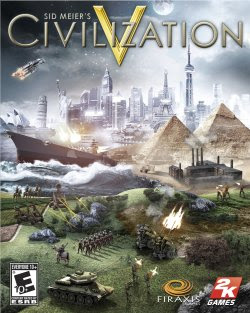
Front cover for the video game Civilization V.
If you'd like a tech-fueled inefficiency tip, this image should serve. 

I have always been technologically curious, but as one grows and changes, perhaps it is inevitable that one realizes what they didn't previously know or appreciate; so too have I realized that there were lots of technological possibilities that I was slow to take up. There seems to be an undertone of skepticism among folks in academic humanities circles about using technology, systems, or techniques for efficiency and an even greater fear of admitting one has engaged in such behavior, and so I perhaps unnecessarily developed an aversion to using it to support my research; though I was keen on incorporating tech into teaching, my process of doing so was admittedly prone to making my preparations more time-intensive rather than less (implied, I think, by my observation in this 2018 reflection on preparing my Fiction and the Historical Imagination course). Part of this, I think, was a symptom of a peculiarly humanistic tendency (or so it seems to me) to feel that to save time is to be cheating in some way; that if our work is valuable it is valuable because we agonized over it at great length, and can be said to have depended upon no one but ourselves and our incredible intellects. Ultimately, however, both students and the work, not to mention my own well-being, have been better served by embracing ways to make life a little easier and a little more collaborative. As a result, in this post, I'm reflecting on four things I came to appreciate in the last two years or so that I really, really wish I'd been doing the whole dang time.

Use OCR

Optical Character Recognition (OCR) is much better than it used to be, and it doesn't have to be perfect to be helpful. I think I became hesitant to try again with OCR after an ill-fated attempt at digitizing a single issue of Cosmopolitan magazine so I could "perform Digital Humanities" on it as an undergraduate. However, toward the end of my dissertation writing process and into my current work I've seen how improved the technology is and how much I now take it for granted. If you have archival photos or scans, try using Adobe Acrobat or a free OCR tool to recognize the text. This will not only make it more accessible if you are distributing it to students, but also make it easier for you to search for terms within it (which would have come in very handy had I figured this out earlier in my dissertation research process, as I worked almost entirely from archive photos and scans while writing).

Use Excel

You know you can use Excel for whatever you want? You don't even have to be a card-carrying "quantitative researcher." Here's one thing I now use all the time and which would have worked well in conjunction with the idea of OCRing things: the UNIQUE function, which can take a list of items and strip out all the repeats, leaving only one iteration of each name, number, list item, etcetera. Imagine how much more easily I could have answered questions about how many disabled children were represented in an issue of a periodical if I'd known this.

Use the Internet

You don't have to do everything yourself. Some subjects have existing resources, whether entry-level memorization and practice activities on tools like Quizlet or Kahoot or mid- to higher-level activities created by other instructors and distributed on educational resource sites like MERLOT or the Zinn Education Project or through affinity groups like the Reacting Faculty Lounge or via personal blogs (hi!). Some activities pitched to high school learners can be employed usefully in a higher education setting with a few tweaks. Some materials can also be created by students as part of their learning process; instead of making a Quizlet for students to practice with, ask groups to create their own Quizlets of the top five or ten topics / terms / concepts and compare their results. 

In short, I wish that I had appreciated earlier how many other things existed that I could use rather than reinventing the wheel every time. Sometimes it seemed like it would have been harder to find and enact an idea elsewhere than creating it myself, but looking a little harder could have paid off-- not only would this have saved me time, but it would have been useful to me to see how other people were approaching teaching various topics to inspire the activities and assessments that I created.

Use a Repetition-Mitigator

Relatedly: If you do have to do something yourself (making an activity, grading), you don't have to create everything from scratch every time. It's great to make something new! As I've mentioned in a previous post on career preparation, if you are an early career teacher, it's in fact essential to make some new things if you'd like to be able to fruitfully reflect on those experiences in later job interviews or teaching statements. However, if you save time on some of the more rote requirements and/or incorporate already existing resources, you'll have more time for creating novel activities and giving meaningful feedback. 

Efficiency in grading is one example of this. Rubrics and comment libraries (either technological ones, like within LMS systems, or low-tech numbered lists you can show to students in conjuction with papers marked with corresponding numbers) can allow you to skip writing "Needs to use at least three sources" in paper comments seventeen times, leaving additional time to write more specific and useful comments like "Your paper's argument might benefit from a closer read of Source A" or "If your goals are X, you should focus on Y aspect of the homework for next week." I only started appreciating what a time-saver this could be late in the game, and I wish I'd used it more thoughtfully and more often.

What tips, strategies, or tools do you wish you'd appreciated and used earlier? Feel free to let me know in the comments-- I just may have to start adopting them myself.

Related Links: 

One of my favorite activities supported by an existing resource: after being asked to deliver a short lesson to a group of epidemiology students on the fly during my time at the Johns Hopkins Center for Talented Youth, I followed a brief lecture on the history of polio with asking students to play the Smithsonian National Museum of American History's Got Ramps? Architectural Barriers Game and compare notes on which endings they achieved. 

If you're interested in the NMAH's work on polio, or thoughts on incorporating museum resources and exhibits into teaching, you may be interested in revisiting this 2017 post on the curator's interview with David Serlin.

Monday, March 26, 2018

What's History: Seeing It IRL

As I've mentioned, I'm currently on my research year, making a lot of short trips to different archives in order to look at materials (mostly old pieces of paper in various formats) that will inform my dissertation. Everyone's approach to research is different-- some people spend an entire year in one place at one archive; some projects are more heavily tied to a particular location than others. The process has inspired a great deal of reflection for me about the way that history is written-- no surprise there-- and about how to incorporate an appreciation of that complicated fact into classroom discussions of the discipline.

Types of sources are a common source of conversation and frustration in a history classroom. We can identify primary and secondary sources when they are clearly packaged (A Civil War letter! A recently published monograph!), but struggle to make the difference evident in more complex materials (A documentary created in the time period under study?). Reliability of sources is another point of challenge and is often dealt with by rigidly controlling the sources that students are allowed to use for a paper (only this book and the articles we've used in class, select two readings from this curated list, etcetera). So often we tell students to cite things not-the-internet simply because we're scared of letting it in with all of the confusion it presents. For a brief period, instructors could get away with saying that nothing on the Internet is a reliable source, but in the age of digital humanities such a proclamation is not just inaccurate but downright misleading. And when eventually these students choose individual topics on which to write research papers, they have no experience in choosing a good source. It is more difficult than we let on to explain the gentle nuances of why one thing is a good source for a history paper; another is not; another you can get away with, but only for certain projects. And then you go to a Very Nice Archive for your own research and find folders full of printed out emails and websites from the 1990s, and you chuckle quietly to yourself.

In short, there's a lot to be said about what can be done on the internet as far as research goes. But what I want to explore for a minute is the kind of things that can't-- the reasons why many travel to do historical research. This is not always a need that seems apparent to those outside of the discipline, a fact hammered home to me recently while staying at an Airbnb for research on the East Coast. I met several friends of the host, and as we sat around chatting over wine and the skeletal remains of dinner, I described my trajectory of travel-- Ohio to Buffalo to Northampton to Hartford to Boston to New York to Washington and then, who knew? I hadn't nailed down anything after that point. "But why do you have to go to all those places?" one asked. "This stuff isn't available online?"


The conversation stuck with me-- both for the crystal-clear image of this scene in Hail Caesar! that it brought to my mind and as an instigator for a series of thoughts about explaining why, exactly, one might still need to go somewhere else to learn something about the past.

There's the obvious, of course-- there are a lot of things in the world that haven't been digitized, and if you're interested in writing about people who have not traditionally been favored subjects of historical study, sources about them are often the things that haven't been digitized. There's also a material culture element. As I've alluded to in talking about scrapbooks, some sources provide rich information that needs to be seen and touched in person. Many scrapbooks include greeting cards with manipulable or removable elements, letters which have to be unfolded or turned to read them in their entirety, or photos attached by tape on one side with a caption on the back-- all features which are difficult to make available in a digital format.

There's also a sense of obligation which informs the practice of traveling for research, based on the idea that it seems dishonest to write about a place without having been there. There's an idea that the "realness" of the place, the culture, will rub off on you a bit and will give you insight into the topic. I have to admit that this is not a super strong motivator for my own travels, as quite often the materials I am looking at are not necessarily local to the repository which holds them, and as its all US there's only so much you can argue about local cultures before it becomes a little too wildly specific (I'll defend to the death my argument that OKCians and Tulsans breathe entirely different air! My own south side of Wichita is so unlike the east or west sides as to constitute its own planet! Urbana? I don't know her). In fact, my research is more focused on tracing a common experience than it is on defining regional differences.

Perhaps more useful is a reason I didn't fully appreciate until recently-- a visit to a place can show you the way people remember its history. I visited Warm Springs, Georgia this month to look at that materials still held by the Roosevelt Warm Springs Vocational Rehabilitation Campus (previously the Georgia Warm Springs Foundation, a leading treatment center for polio patients from the late 1920s to the 1960s). I was able to see the pools used for hydrotherapy and read a bit about the people who used them-- I even fully embraced the tourist experience and bought a bottle to fill with water from the famous Warm Springs. I walked around the still functional campus, which features pictures of former residents and a walking tour of notable buildings. Being there in person gave me an idea of the physical space occupied by people who have reflected on their experiences at Warm Springs in memoirs and periodicals. 

Although all of this is available for one to see and do at the Rehabilitation Campus, it is not the main historical attraction in town, and indeed I did not even discover that the walking tour was available until I arrived on the campus to check in. The average person passing through would be most likely to see Roosevelt's Little White House State Historic Site, which focuses heavily on Franklin Delano Roosevelt's life and presidency.


The Little White House. 
In addition to the Little White House itself, where FDR lived when he was in the area, and its associated guesthouse and servants' quarters, a small museum introduces visitors to the president and his time in the area. The exhibits there emphasize what role Warm Springs played in FDR's life and work, not just in terms of his physical rehabilitation and dedication to polio-related causes but also how rural life impacted his ideas about electrification and other New Deal programs. This is most dramatically demonstrated by the presence of a full-size electrical pole within the exhibit, with wires extending to a small replica cabin representative of that found in the area during his tenure in Warm Springs.


The pole, next to a wall reading "New Deal" and in front of one reading "Rural Electrification." 
The memory here of FDR the president is selective-- I found a single reference to Japanese-American internment, which appears on the timeline at the front of the museum and seems to be doing its best to make it appear to be an unrelated happenstance that occurred during Roosevelt's presidency rather than an executive order he personally signed.

The "World War II" section of the timeline with entry at top: "Japanese-American internment camps are created." 
More attention is paid to Roosevelt's experience of disability and the mobility aids he used. His adapted car appears in the center of the exhibit, and one of the last sights before you exit the building (onto a path with scooters available to ride to the Little White House itself) is a long row of display cases filled with the ornately carved canes that FDR received as gifts.


Roosevelt's last car at Warm Springs. 


The cane collection (and, naturally, my finger. Oops!)
So, this is a lot of travel talk-- how can we hope to make any of this useful in the classroom? Yes, I would love to send my students on trips around the country to see the current iterations of the ideas and people we've talked about in class (part of my impetus for starting this blog was, in fact, my desire to share things related to RTTP that I've seen while traveling with former students). 


Descriptions and photos of places can add modern relevance to a historical discussion. If you want to emphasize how history is made, an acknowledgment of travel for your own research can also be helpful-- how is the history we know and read shaped by the sources that happened to be available where the researcher was and the time they were there? For some topics, sharing photos of associated places can be useful-- when teaching the Four Freedoms in the US survey, I like to talk about the prominent role the Four Freedoms play in Washington D.C.'s FDR Memorial, and now I can supplement that with their appearance at the end of the Little White House Museum as well. 


The Four Freedoms wall at the Little White House Historical Site, including the Norman Rockwell prints of each.
Why did these words not only matter in the 1940s but also maintain staying power as part of the legacies of FDR and World War II? Why would curators choose to end this museum with this display (just before, of course, the gift shop)? What relationship do these words have with those of Executive Order 9066? Posing such questions can emphasize the continuing relevance of particular interpretations and sources to the neglect of others in public and local history.

But photos and stories can only be illustrative up to a point, and run the risk of feeling a little "look at my vacation slides." There are also more interactive ways to approximate the benefits of travel in the classroom. One option is to use local resources, like museums on campus with exhibits or objects related to the course. I was able to do this during Greenwich Village, 1913 last year when a professor teaching the game in another course set up a visit to the Krannert Art Museum to examine art from the period and suggested I come look at the same materials with my class. 


Another thing I like to do is encourage students to reflect on the landscapes they grew up in, have visited, or travel through daily. What echoes of the past surround them-- a street named after a local Klan member (or maybe a photographer)? A campus building named for a state governor friendly to late nineteenth century labor movements? How was the suburb they grew up in or the city they vacationed in over spring break shaped by economic boom and bust, struggles of race and class, or changing trends in transit, entertainment, tourism? Looking at the familiar in a newly thoughtful way brings benefits similar to those of traveling. 


Has travel changed the way you think about history or informed the way you teach? 


Related Links:
Would that it were so simple on Youtube.
If you like the Four Freedoms, you may also enjoy the Franklin D. Roosevelt Four Freedoms Park in New York City.
For more on FDR and Japanese-American internment, check out this collection of primary sources from the FDR library. (Note particularly the mention of "various special interests" that would welcome the removal of Japanese-Americans from their land in Document 4, a frequently overlooked factor in discussions of internment, and Document 7, the text of Executive Order 9066.) 
You may also enjoy the innovative monograph Concentration Camps on the Home Front: Japanese Americans in the House of Jim Crow. 
For a non-FDR perspective on Warm Springs, have a look at the incredibly readable memoir Warm Springs: Traces of a Childhood at FDR's Polio Haven (available as an ebook with a Champaign Public Library card!)

Monday, October 30, 2017

What's History?: Museums


As part of my recent research travels, I visited the National Museum of American History. I was fortunate enough to receive a Travel Research in Equity Collections (TREC) award, so I was able to meet with one of the historians of disability I most admire, curator in the museum's Division of Medicine and Science, Dr. Katherine Ott. I first became interested in disability history in a course which used Artificial Parts, Practical Lives: Modern Histories of Prosthetics, the volume she edited along with David Serlin and Stephen Mihm. Her contribution to that volume fascinated me at the time; her recent theoretical work on the special role of material culture in disability history has informed my PhD scholarship.

In preparation for meeting up with her, however, I revisited Making Disability Public the interview she gave to David Serlin for the Radical History Review. 2005 Smithsonian exhibit she curated, Whatever Happened to Polio? as well as the 2000 exhibit for the anniversary of the ADA about the disability rights movement. In the interview, Ott and Serlin discuss what it means to do public history, and Ott's approach to both exhibits supplies one possibility: to center the public, not medical establishments or curatorial voice, in the creation of an exhibit. This is accomplished through talking to affected people (in the case of these exhibits, people with disabilities and polio survivors) through surveys, interviews, or conversations, and "serving as the medium for [these] stories" (200), as well as letting the objects available guide the direction of the exhibit (205).

The piece is delightful for a variety of reasons: it is conversational and easy to read, yet both participants' contributions are deeply thoughtful; there are discussions of academic versus public history which not only value both spaces but offer insightful insights into the workings of each space and the considerations necessary to inhabiting both spaces. There are obvious points of interest to professional historians of all types. There are also elements which are clearly valuable to a class on disability history or disability studies. But on this reading I began thinking for the first time of how much I'd like to share the insights of this piece with the students I most frequently teach, those taking a more general, lower level introductory course. 

Many students come into history classes thinking that they are there to learn facts and straightforward narratives about history, when most people who teach college-level history will tell you that a large part of their goal is to teach broad skills-- the practices of interpretation, research, writing, and critical thinking that are applicable to many arenas outside the discipline. Many courses end up being a combination of these two attributes. But there's also a third element which often is considered only relevant to those who intend to pursue the major. This is the idea of specifically historical practice, the way in which history is done and made. I have a real passion for incorporating these ideas into courses which are not for majors, which are relatively low level, and which are ostensibly about a variety of other topics.

To me, it's critical for students who never dreamed of studying history professionally to know how history is made-- to learn how its made is to have some conception of how to judge the quality of the history that someone may be trying to teach you. Though some of them wish to learn discrete facts which they can use to build a knowledge base, some of them are less excited to learn that the process of finding and building these facts into a transmittable narrative is both subjective and laborious. Public history, especially in the form of museum exhibits, is a critical way in which history is made and transmitted-- yet it is so rarely interrogated in general history classes.

Not all aspects of this interview will be of interest to most students I teach. A discussion of the many problematics of the concept of "public(s)" (199) may not play a leading role in a discussion I might have of this piece with my class. However, the detailed discussion of the way museum exhibits are built and the idea that there are multiple goals one can have with an exhibit is something that I think would play a valuable role in classroom discussion.

As an assignment to go along with this article, I would encourage students to head to a local museum and visit an exhibit. They should try to figure out how the artifacts available informed the creation of the narrative, and whether it is "object driven" or "narrative driven" (209).

Other potential questions include:

Audience interviews about the polio exhibit suggested that age informed people's interest in a polio exhibit (207). What do you think a breakdown by age of the exhibit you viewed might look like?

Take a survey of interest in the topic of the exhibit from at least five people from two of the following groups:
Under 25s
25-30
30-35
35-40
40-45
Over 50

What role does emotion play in the exhibit you viewed?

Did your exhibit have a comment station? What would your comments be?

How would you redesign the exhibit, and to what end?


Anything else you'd like a discussion about museums to focus on at this level? Questions about the piece? Let me know in comments or email! 


Related Links:


A digital version of the polio exhibit. 
For Illinois affiliated folks, logging in at this link should lead you to Serlin, David. 2006. "Making Disability Public: An Interview with Katherine Ott." Radical History Review no. 94: 197-211. Academic Search Ultimate, EBSCOhost (accessed October 29, 2017).